

Chatbot Roast
The Web Design Industry Stole Ten Years From Service Businesses
June 21, 2026 · 6 min read
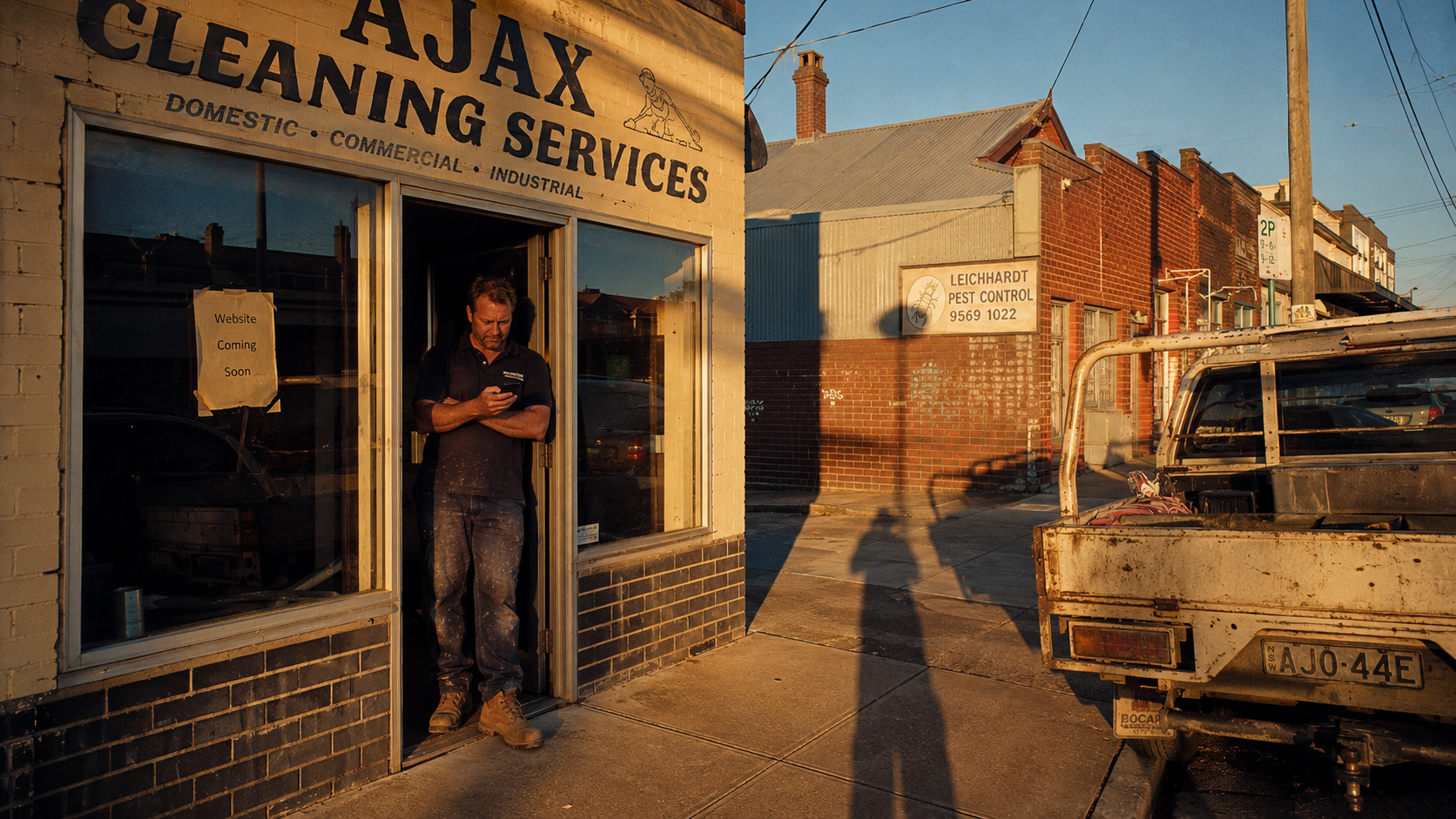
You didn't buy a website. You bought a billboard and called it marketing.
The web design industry has been selling the same product to service businesses for a decade: a beautiful website.
Hero image. About page. Services page. Testimonials. Contact form. Maybe a blog nobody reads.
Cost: $5,000 to $20,000. Timeline: six to twelve weeks. Result: a digital billboard.
Not a salesperson. Not a booking system. Not a lead machine. A billboard that sits on the internet and hopes someone fills out a form.
For ten years, this was the standard. And for ten years, service businesses wondered why their website "didn't generate leads."
The contractor survey nobody talks about
#2
challenge for contractors: generating quality leads
Contractors were asked: what's your #1 business challenge? Leads.
What's #2? Leads.
What's your biggest frustration with your current marketing? "The website doesn't convert."
These are businesses spending real money — Google ads, SEO, social media — sending traffic to websites that can't close.
The web design industry heard "leads are the problem" and responded with "have you tried a contact form with fewer fields?"
That wasn't the answer. That was the same answer with one less field.
The chatbot lie
When forms stopped working — because they never really worked — the industry pivoted.
"Add a chatbot!" Same website. Same billboard. Now with a corner bubble that says "Hi there! 👋"
The chatbot vendor promised: 24/7 availability. Automatic lead capture. AI-powered responses.
The chatbot delivered: 10–20% resolution rate. 77% user frustration. 81% of people still asking for a human.
You didn't add a salesperson. You added a FAQ page that interrupts people while they're trying to read your billboard.
The form lie
81%
reach a contact form but never submit
The contact form is the original sin of service business websites.
"Get a Free Quote." Sounds low commitment. Sounds easy.
Reality: name, email, phone, service type, address, preferred date, message, submit. Then: "Thank you! We'll be in touch within 24–48 hours."
81% of people who reach a contact form never submit it. Of those who do, response times average 24+ hours. By then, they've hired someone else.
The form didn't capture a lead. It captured a slow-motion loss.
What customers actually want
75%
want human voice interaction for service questions
Customers don't want to fill out forms. They want to talk to someone who can help.
75% of customers want to interact with a real human voice when they have a question about a service.
Not a form. Not a chatbot. Not an email that says "we'll get back to you." A voice.
They want to describe their problem and hear "yeah, we can handle that — let's get you booked for Thursday."
That's not a technology problem. That's a design problem. For ten years, the industry designed around everything except the thing customers actually want.
Ten years stolen. One fix.
The web design industry sold service businesses a decade of billboards, forms, and chatbot widgets — and called it digital transformation.
The businesses that win now aren't the ones with the prettiest sites. They're the ones whose websites talk.
A voice in the hero section. Trained on the business. Available at 9pm on a Thursday. Booking jobs in two minutes.
That's not a chatbot. That's not a form. That's a salesperson that never sleeps.
The ten years are gone. The fix is here. Stop paying for billboards.
Hear your homepage talk back.
Drop your URL for a personalized demo — about 10 minutes.
Keep reading
Chatbot Roast
Three Months of Looking at Service Websites Broke Me
I spent three months auditing service business websites. The data is brutal and the chatbots made everything worse.

Chatbot Roast
Every Chatbot Claim vs. What Actually Happens
Your chatbot vendor sent you a deck full of promises. Here's what your customers actually experience.

Chatbot Roast
The Chatbot Industry Is a $10 Billion Lie
The chatbot industry is worth $10 billion. Not because chatbots work. Because the lies are well-marketed.